Structural vulnerability in residential roofing systems invites heavy wildlife activity across Southern California. In Los Angeles County, subterranean architectural designs and dense palm landscaping create direct…
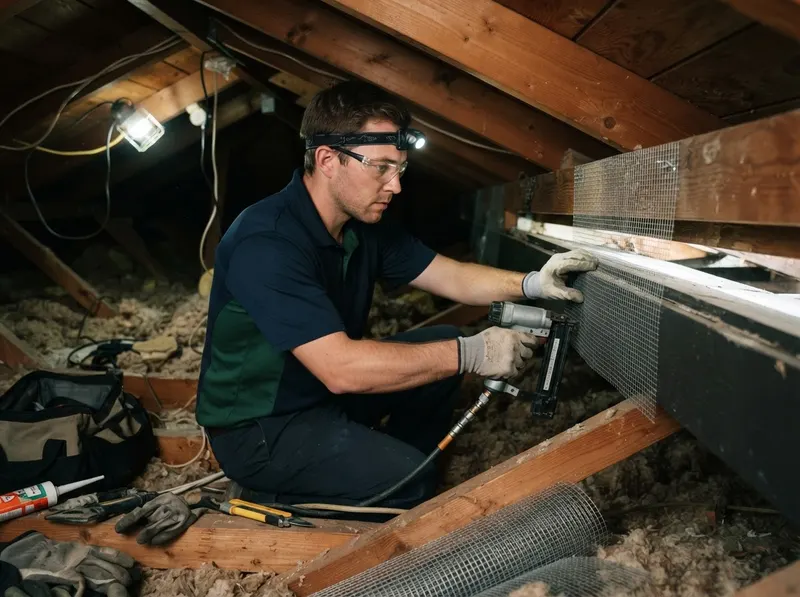
Structural vulnerability in residential roofing systems invites heavy wildlife activity across Southern California. In Los Angeles County, subterranean architectural designs and dense palm landscaping create direct travel bridges for roof rats (Rattus rattus) and Norway rats (Rattus norvegicus). BeaconHill Exterminators addresses active harborages by deploying integrated pest management principles that prioritize permanent physical barrier installation over recurring toxic chemicals. Instead of temporary rodenticides that risk secondary poisoning to domestic animals or cause rodents to expire inside enclosed wall cavities, our technicians seal exterior utility knockouts, weep screens, and roofline transition points using heavy-gauge welded wire fabric meeting ASTM A740 industrial wire specifications.
Attic environments damaged by rodent colonies retain biological hazards long after adult rodents are trapped. Biological deposits contain airborne pathogens like lymphocytic choriomeningitis and aerosolized bacterial spores. Field protocols follow containment guidelines defined by the Centers for Disease Control and Prevention, utilizing point-of-source negative pressure machines equipped with certified HEPA filtration units that extract particulate matter down to 0.3 microns. In hillside microclimates like Silver Lake, Los Feliz, and Highland Park, where older Craftsman framing and Spanish tile roofs present multiple roof-ridge gaps, technicians apply expanding polyurethane biocidal foam paired with copper mesh to seal non-uniform tile openings without damming natural structural drainage.
Remediation continues through thorough thermal replacement to maintain attic efficiency and comply with California Title 24 Building Energy Efficiency Standards. Damaged, compressed, or odor-saturated fiberglass is removed via specialized heavy-duty vacuum containment bags to prevent cross-contamination into primary living spaces. Technicians apply broad-spectrum microbial disinfectants regulated under the California Department of Pesticide Regulation, neutralizing biological pheromones that attract outside foraging pests. For multi-story homes in Brentwood and Pacific Palisades, technicians evaluate roof dormers and exterior plumbing penetrations to reinforce chimney flashings according to NFPA 211 structural standards. Commercial flat-roof properties and duplex structures in Koreatown, Echo Park, and North Hollywood receive specific perimeter defenses against common municipal drainage vectors, adhering to health codes maintained by the Los Angeles County Department of Public Health.
1. Structural diagnostic inspection: Technicians locate entry breaches along foundation footings, crawlspaces, fascia corners, and roof junctions.
2. One-way valve installation and trapping: Active populations are trapped within the envelope while secondary paths are systematically closed to halt interior access.
3. Physical barrier fortification: Technicians bolt custom-formed structural metal over gable vents according to guidelines from the National Pest Management Association and backfill masonry penetrations.
4. Hazardous thermal extraction: Contaminated materials are extracted and disposed of in compliance with the California Department of Resources Recycling and Recovery regulations.
5. Bio-wash and thermal reinstallation: Attic spaces are disinfected with virucidal solutions before fresh borate-treated, fire-retardant cellulose is installed to target R-38 thermal values.
Property owners comparing rodent defense strategies balance immediate short-term poison bait boxes with permanent exclusion assemblies. While periodic surface bait stations offer a lower initial entry price, they fail to halt new rodent families from invading attics through open architectural fissures. Physical exclusion requires higher diagnostic labor during the initial installation phase, but it halts structural gnawing, eliminates biological attic contamination, and protects electrical wires from hazardous short circuits without mandatory, indefinite chemical monthly maintenance agreements.
Every job gets a firm, written price after a free on-site visit.
For standards, safe disposal, and service guidance on pest control services in Los Angeles, CA, useful references include U.S. EPA, ENERGY STAR, U.S. Dept. of Energy, Consumer.gov, U.S. Census Bureau, and Google Maps. General consumer and small-business resources are available from USA.gov, Better Business Bureau, FTC Consumer Advice, U.S. Small Business Administration, and Ready.gov.
Tell us about your targeted rodent exclusion and attic remediation job in Los Angeles and we'll send a clear, written quote, usually the same day.
 BeaconHill Exterminators