Structural pest control operations require uncompromising precision when confronting pesticide-resistant insect strains in densely populated environments. In multi-unit properties across Koreatown and older craftsman…
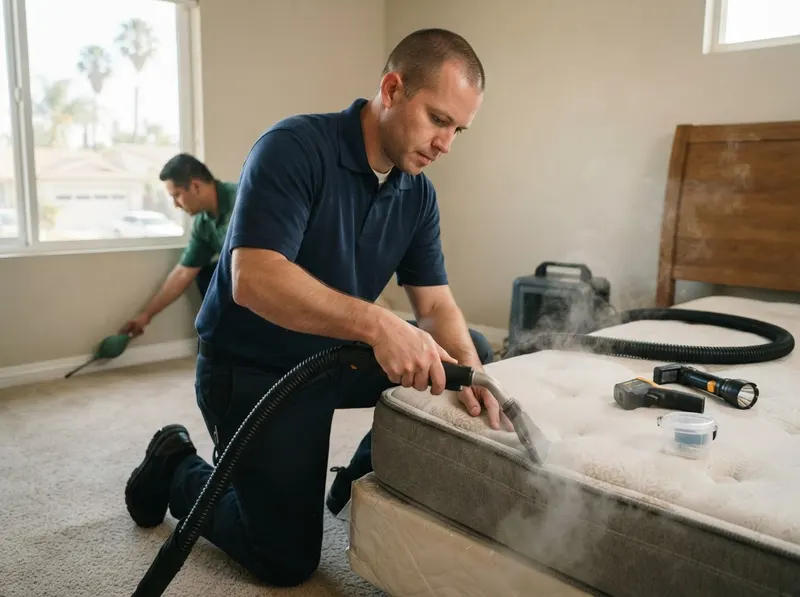
Structural pest control operations require uncompromising precision when confronting pesticide-resistant insect strains in densely populated environments. In multi-unit properties across Koreatown and older craftsman duplexes throughout Echo Park and Silver Lake, localized chemical applications frequently fail because bed bugs retreat into shared wall cavities. The protocol established by BeaconHill Exterminators pairs high-BTU electric or hydronic convective heaters with localized synthetic chemistry. According to testing metrics documented by the U.S. Environmental Protection Agency, sustaining an ambient room temperature between 120°F and 135°F achieves lethal exposure for both adult insects and desiccation-resistant eggs within 90 minutes. Technicians position high-temp radial air movers alongside real-time thermocouple sensors to verify that core structural voids, mattress cores, and behind-baseboard channels reach lethal thresholds without causing thermal deformation to sensitive architectural trim or drywall.
Thermal remediation addresses the immediate active population, but building architecture in historic neighborhoods like Los Feliz and Highland Park features framing voids that act as thermal sinks. In these specific structural junctions, technicians apply an amorphous silica desiccant dust or non-repellent liquid residual aligned with guidelines published by the UC Statewide Integrated Pest Management Program. Amorphous silica disrupts the waxy outer cuticle layer of surviving specimens, inducing dehydration without prompting insect dispersal into neighboring units. Technical requirements outlined by the California Structural Pest Control Board mandate precise application limits around sleeping quarters to ensure family and pet safety. Homeowners and property managers avoid ongoing cyclic chemical reapplications by utilizing an integrated protocol that unifies thermodynamic lethal exposure with perimeter chemical defense.
Standard preparation protocols diverge depending on home construction types throughout Venice and North Hollywood. A single-family residence with open slab construction permits broad-scale convective heating runs lasting 6 to 8 hours. Conversely, multi-story hillside residences in Brentwood and Pacific Palisades require segmented thermal zones combined with perimeter structural sealing. When managing older single-wall construction, technicians incorporate recommendations from the Centers for Disease Control and Prevention, utilizing physical mattress encasements to verify total boundary containment. The mechanical heating process eliminates the operational downtime associated with repeated fumigation cycles, while integrated chemical barriers prevent cross-contamination across shared plumbing chases. For emergency technical dispatch or structural assessments, call (424) 540-2784 to coordinate site evaluations.
Every job gets a firm, written price after a free on-site visit.
For standards, safe disposal, and service guidance on pest control services in Los Angeles, CA, useful references include U.S. EPA, ENERGY STAR, U.S. Dept. of Energy, Consumer.gov, U.S. Census Bureau, and Google Maps. General consumer and small-business resources are available from USA.gov, Better Business Bureau, FTC Consumer Advice, U.S. Small Business Administration, and Ready.gov.
Tell us about your bed bug thermal eradication and targeted chemistry job in Los Angeles and we'll send a clear, written quote, usually the same day.
 BeaconHill Exterminators